
Unveiling Yongsu-dong: Your Serene Escape to Daegu’s Palgongsan Wonders!
Daegu’s Hidden Gem: A Healing Journey to ‘Dong-gu Yongsu-dong’ in the Heart of Palgongsan!
Hey everyone! When you think of “Traveling to Korea,” do dazzling Seoul nights or the blue seas of Busan pop into your head first? While those spots are amazing, today I’m letting you in on a real “local secret” that Daegu residents usually keep to themselves. It’s the heart of Daegu’s Dong-gu: Yongsu-dong!
The name might sound a bit new, but think of this place as the grand entrance to Palgongsan Mountain, the spiritual soul of Daegu. It’s where you can escape the grey city buildings and find crisp air, serene temples, and breathtaking nature all at once. Ready to dive into the charm of Yongsu-dong with me? Let’s go!
First Impressions: Where Nature Meets Culture
Located in the northeastern part of Daegu, Yongsu-dong is the essential gateway for exploring Palgongsan Provincial Park. The moment you drive toward this area, you’ll feel the scenery shift 180 degrees. Instead of concrete jungles, you’re greeted by lush forests and that refreshing scent of pine needles that just hits different.
But it’s not just about the views! Yongsu-dong is a sacred land of Buddhist culture dating back thousands of years. As you walk through the mountain trails, you’ll feel like you’ve stepped into a time machine, surrounded by ancient hermitages and legendary stories.
History & Miracles: Donghwasa Temple and Gatbawi
There are two “crown jewels” you absolutely cannot miss in Yongsu-dong: Donghwasa Temple and the Gatbawi Buddha.
-
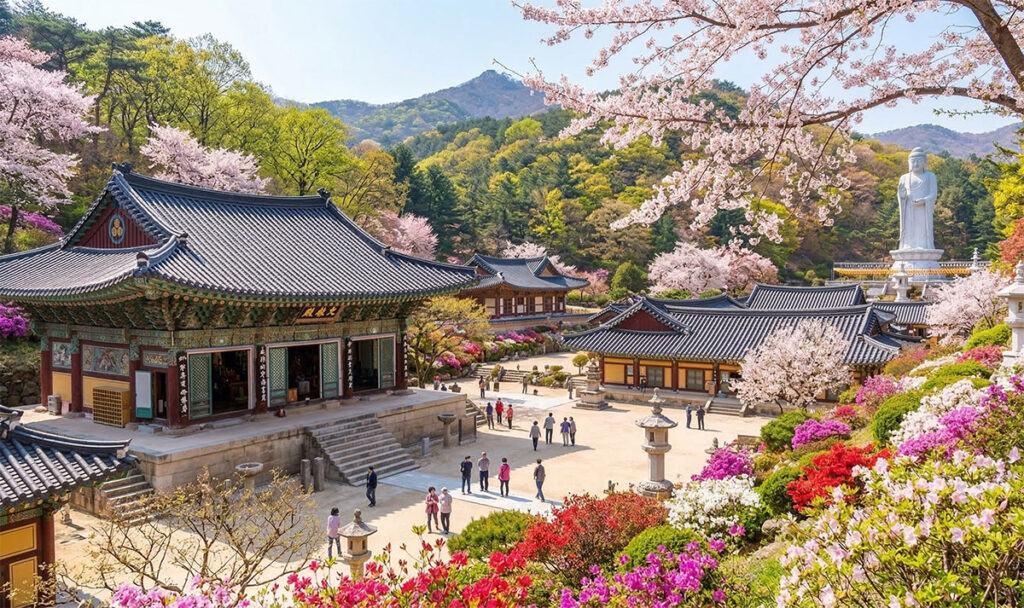
Donghwasa Temple: Feel the Silla Dynasty Founded in 493 AD, Donghwasa (meaning “Paulownia Blossom Temple”) got its name from a legend that paulownia trees bloomed here even in winter. The highlight? The Unification Yaksa Yeorae-daebul—the world’s largest stone Buddha statue! Standing in front of it is truly jaw-dropping. Take a slow walk around it and make a wish; you’ll feel your batteries recharging instantly.
-
Gatbawi: One Wish Granted for the Sincere! This is the famous Stone Seated Buddha, nicknamed “Gatbawi” because it looks like it’s wearing a traditional Korean hat (gat). Legend says that if you pray with a sincere heart, at least one wish will come true. It’s so famous that people flock here from all over Korea during exam seasons or New Year’s. The hike up from Yongsu-dong might leave you a bit breathless, but the panoramic view of Daegu from the top makes every step worth it!
“Instagrammable” All Year Round!
Yongsu-dong is like a magician that changes outfits every season. I saw a photo from September 2019, and the autumn colors were unreal—it looked like the mountain was painted with red and gold watercolors.
-
Spring (April–May): A tunnel of light pink cherry blossoms welcomes you, followed by vibrant azaleas. It’s the season where you can’t help but hum a song while walking.
-
Summer (June–August): Want to escape the “Daefrica” (Daegu + Africa) heat? The valleys of Yongsu-dong are your answer. The thick forest acts as a natural air conditioner.
-
Autumn (Sept–Nov): Highly Recommended! The foliage here is among the best in Korea. Take the cable car up and snap a photo with the five-colored leaves below you. Instant profile picture material!
-
Winter (Dec–March): The silence of a snow-covered temple is a vibe only the pros know. Walking on crunchy snow while looking at the snowy peaks is like being inside a traditional ink painting.
Getting There: Easier Than You Think!
“Is it hard to reach because it’s in the mountains?” No way! Yongsu-dong is super accessible.
-
From Daegu City Center: Just hop on Express Bus 1 (급행1) or Palgong 1 (팔공1). In about 40–60 minutes, you’ll be dropped right at the entrance of Donghwasa Temple.
-
From Other Cities: Take the KTX to Dongdaegu Station. You can transfer to the buses mentioned above right outside the station, or grab a taxi for a quick and easy ride.
-
By Car: Plenty of parking is available near the temple and the cable car station.
Pro-Tips for Your Trip
-
Eat the “Mountain Food”: You HAVE to try the Sanchae Bibimbap (mountain vegetable rice bowl) at the local restaurants. It’s made with fresh greens from the mountain—pure health in a bowl!
-
Wear Comfy Shoes: Casual clothes are fine for the temple, but if you’re heading to Gatbawi, sneakers or hiking shoes are a must.
-
Ride the Cable Car: If you’re with kids or parents, use the Palgongsan Cable Car. It takes you near the peak comfortably with zero effort.
-
Entry Fees: Some temple areas might have a small cultural heritage fee, so keep a little cash or your card handy.
The Perfect One-Day Itinerary
-
09:30 AM: Explore Donghwasa Temple. Snap a photo with the Great Unification Buddha.
-
12:30 PM: Lunch at a local spot. Crispy Korean pancakes (Pajeon) + Bibimbap = Heaven.
-
02:00 PM: Palgongsan Cable Car. Enjoy the views and take a light stroll at the top.
-
03:30 PM: Gatbawi Hike (Optional). Challenge yourself and go tell the Buddha your secret wish!
Yongsu-dong isn’t just a tourist stop; it’s a place to heal your soul and get a “nature reset.” Next time you’re in Korea, skip the usual crowded spots and head to Dong-gu Yongsu-dong in Daegu! You’ll come back with a heart full of memories and a phone full of amazing photos.
#KoreaTravel #DaeguTourism #Palgongsan #Donghwasa #Gatbawi #VisitKorea #HiddenGem #HealingTrip #TravelGram