
Discover Jipum-myeon: Yeongdeok’s Serene Mountain Retreat in Gyeongsangbuk-do
Discover the Secret Garden Behind the City of Snow Crabs: A Pure Healing Journey to Jipum-myeon, Yeongdeok
When people think of traveling to the East Coast of South Korea, Yeongdeok is often the first name that comes to mind. Images of steaming snow crabs, the endless blue horizon, and the bustling energy of Ganggu Port define the region’s identity. However, for those who look a little deeper, there is a “plot twist” to Yeongdeok—a hidden gem tucked away in the deep, rolling mountains. That place is Jipum-myeon, located in the innermost part of the county.
Today, I want to take you on a vivid journey to Jipum-myeon, a place that preserves the purest nature of Korea. It’s a destination that will wash away your urban stress in a single breath. If you’ve ever wondered if such a serene place existed in Yeongdeok, prepare to be amazed.
Jipum-myeon: Yeongdeok’s Inner Sanctuary Where Mountains and Wind Rest
Located at the western edge of Yeongdeok-gun, Jipum-myeon sits at the gateway leading to Andong and Cheongsong. As you drive inland from the coast, the scenery transforms instantly. Towering skyscrapers are replaced by winding mountain ranges and the sound of crystal-clear streams. Jipum-myeon truly lives up to its vibe as a “sanctuary of nature.”
The history here isn’t found in grand monuments but in the sweat of the people who cultivated this rugged land. The terraced rice paddies following the mountain slopes and the rustic stone walls make you feel as if time has stood still. It is a living museum that showcases the authentic face of rural Korea—a side of the country you can never experience in a modernized city.
Nature’s Palette: The Golden Seasons of Jipum-myeon
The true value of Jipum-myeon lies in the way nature changes its clothes with every season. While it’s beautiful year-round, here are the highlights you shouldn’t miss:
1. Spring (April–May): When Paradise Becomes Reality
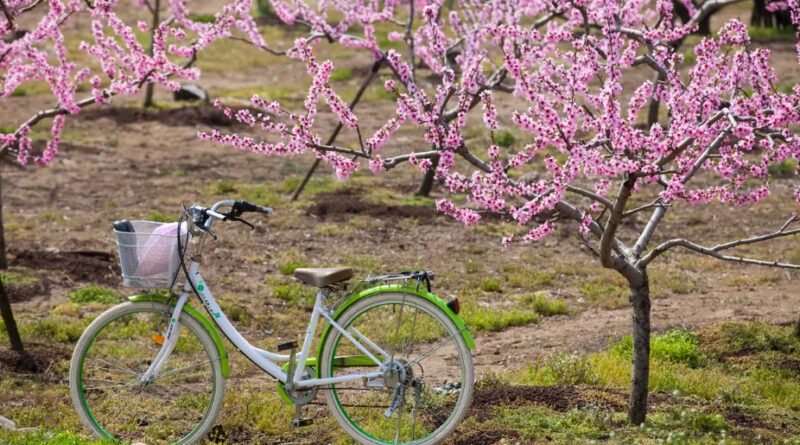
Jipum-myeon is famous as a “Peach Blossom Village.” In mid-April, the entire area is dyed in shades of pink. The waves of pink blossoms hugging the mountainsides are so spectacular that photographers line up for the perfect shot. The peach orchards shrouded in morning mist create a mystical atmosphere, looking like a place where ancient Taoist hermits might reside.
2. Summer (June–August): The Temptation of Ice-Cold Valleys
For summer vacationers, Jipum-myeon is paradise. The water flowing from the deep valleys of the Osipcheon upper stream is so cold that you can barely keep your feet in for ten seconds. Forest bathing under the natural canopy created by lush trees offers a relaxation far superior to any five-star hotel spa.
3. Autumn (September–November): A Fiery Grand Finale
As autumn arrives, the mountains transform into a riot of red and yellow. The drive over Hwangjangjae Pass is particularly stunning. During this time, the air in Jipum-myeon is filled with the sweet scent of apples. Taking a bite of a freshly harvested apple right at the orchard is the best way to taste the essence of autumn.
4. Winter (December–March): The Deep Comfort of Silence
The snow-covered winter in Jipum-myeon is so quiet it feels almost sacred. The sight of snow piled high on traditional Hanok roofs and the winter sunlight filtering through bare branches helps clear a cluttered mind. I highly recommend winter in Jipum-myeon for solo travelers in need of “me time.”
Traveler’s Guide: How to Make the Most of Your Trip
Jipum-myeon is much more convenient to explore by car or rental car than by public transport. The act of driving slowly through the winding mountain roads with the windows down, breathing in the forest scent, is a journey in itself.
• Transportation: It takes about 3.5 to 4 hours from Seoul. Take the Yeongdeok IC and head toward Andong to reach Jipum-myeon. If using public transport, you can take a local bus from Yeongdeok Terminal, but be sure to check the schedule as departures are infrequent.
• Local Eats: Jipum-myeon is famous for Sanchae Bibimbap (mountain vegetable rice bowl) and freshwater fish dishes. A table set with herbs gathered directly from the mountains makes you feel healthy with every bite. If you crave Yeongdeok snow crab, Ganggu Port is only 20 minutes away, allowing you to enjoy the best of both the mountains and the sea in a single day.
• Photography Tips: In spring, use a low angle to capture the peach blossoms against the mountain ridges. In autumn, use backlighting to highlight the translucent colors of the maple leaves for that “photo of a lifetime.”
Exploring the Region: A Gyeongbuk Tour Route
If you have more time, pair Jipum-myeon with these nearby attractions for a 3-day, 2-night itinerary:
• Yeongdeok Blue Road: A trekking course along the ocean. The dynamic waves of the East Coast provide a fantastic contrast to the quiet healing of Jipum-myeon.
• Cheongsong Juwangsan & Jusanji: Juwangsan National Park is just a short drive away. Its rocky cliffs and the mysterious Jusanji Pond are must-sees for nature lovers.
• Andong Hahoe Folk Village: To experience the essence of Korean Confucian culture, head to Andong for traditional Hanok architecture and mask dance performances.
Final Thoughts
Jipum-myeon doesn’t have flashy neon lights or sophisticated shopping malls. Instead, it offers a rare kind of “rest” and the comfort that only nature can provide. On days when you want to put down your smartphone and listen to the sounds of the forest, or when you want to escape the chaos of the world, Jipum-myeon will always be there to embrace you.
Instead of a typical tourist “stamp tour,” why not go on a trip that truly fills your heart? The hidden pearl of Yeongdeok, Jipum-myeon, is waiting for you.
#YeongdeokTravel #JipumMyeon #Gyeongbuk #KoreaTravel #HiddenGems #HealingTrip #PeachBlossomVillage #VisitKorea #NaturePhotography #SlowTravel #RuralKorea #SouthKorea #TravelGram