
Unveiling Muan-gun Samhyang-eup: Jeollanam-do’s Authentic Heartbeat
Discovering Korea’s Hidden Heart: Why Muan-gun Samhyang-eup is Your Next Must-Visit Destination!
Are you an international traveler yearning to discover the true essence of Korea beyond the glittering skyscrapers of Seoul or the crowded beaches of Busan? If you’re nodding your head, then let me introduce you to a destination that perfectly blends traditional charm with modern convenience, nestled in the picturesque southwestern corner of the Korean Peninsula: Muan-gun Samhyang-eup in Jeollanam-do.
Often overlooked by mainstream tourism, this vibrant township offers a unique, deep-dive glimpse into Korea’s rich agricultural heritage, stunning coastal landscapes, and that legendary warm hospitality characteristic of the Jeolla region. My own journey here captured a moment back in March 2019, and even then, the refreshing beauty of spring in this region was absolutely intoxicating. If you’re looking for an authentic Korea travel experience—one that swaps tourist traps for local soul—Muan-gun Samhyang-eup should be at the very top of your bucket list!
Muan-gun Samhyang-eup: A Fascinating Blend of Tradition and Modernity
Muan-gun, situated in the fertile heart of Jeollanam-do province, is famously known across the country as the “land of mudflats and onions.” But Samhyang-eup holds a particularly special crown within this agricultural wonderland. It actually serves as the administrative center of Jeollanam-do, hosting the grand Provincial Government Office.
This creates a truly fascinating dynamic! Imagine sleek, modern infrastructure and impressive administrative buildings standing in perfect harmony with expansive onion fields and the quiet, rhythmic pulse of traditional rural life. It’s where the “brain” of the province meets the “soul” of the land.
Diving into the Roots: History and Culture
The history of Muan-gun is deeply intertwined with the rhythm of the tides and the richness of the soil. For centuries, the people here have lived in sync with the bounty of both land and sea.
-
The Gift of the Sea: The vast, nutrient-rich tidal flats along the coastline have sustained generations through fishing and specialized aquaculture.
-
The Bounty of the Earth: The red clay soil (Hwangto) here is legendary! It produces Korea’s highest-quality agricultural goods, specifically the sweet, pungent Muan Yangpa (onions) and the incredibly fluffy Muan Goguma (sweet potatoes).
When you visit, you aren’t just seeing a town; you are stepping into the heart of “Namdo” (Southern Province) culture. This region is celebrated throughout Korea for having the absolute best cuisine, vibrant folk traditions, and a sense of community that feels like a warm hug. Travelers will find that Jeollanam-do offers an unparalleled culinary journey, and Samhyang-eup is the perfect gateway to it all.
When to Pack Your Bags: The Best Seasons to Visit
Muan-gun Samhyang-eup wears different “outfits” throughout the year, each one more charming than the last.
1. Spring (March–May): The Great Awakening
As I saw during my 2019 trip, spring here is magical. The weather is crisp and mild, perfect for long walks. The fields explode with vibrant green shoots, and if you time it right, the nearby roads are lined with cherry blossoms and yellow canola flowers. It’s a photographer’s dream!
2. Summer (June–August): Coastal Adventure
It gets warm, sure, but this is the best time to experience Muan’s coastal side! The mudflats are teeming with life, and you can join ecological tours to see the diverse marine species. Plus, summer is prime time for fresh, cooling seafood dishes.
3. Autumn (September–November): The Golden Harvest
This is arguably the most “Muan” season. The air turns crisp, the sky becomes an impossibly deep blue, and the fields are heavy with harvest. It’s a fantastic time for foodies to visit local markets and taste the produce at its peak freshness.
4. Winter (December–February): Serene Stillness
If you want peace and quiet, winter is for you. It’s the perfect season to tuck into a steamy bowl of local octopus soup (Yeonpo-tang) and watch the sunset over the quiet, frozen-in-time landscape.
Top Highlights: What to See and Do
While Samhyang-eup is a great residential hub, its strategic location makes it the ultimate “Base Camp” for exploring the treasures of Muan-gun.
Muan Mudflat Ecological Park
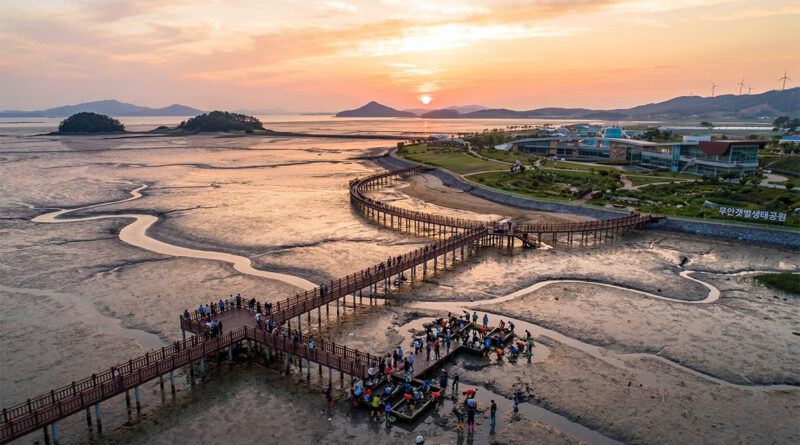
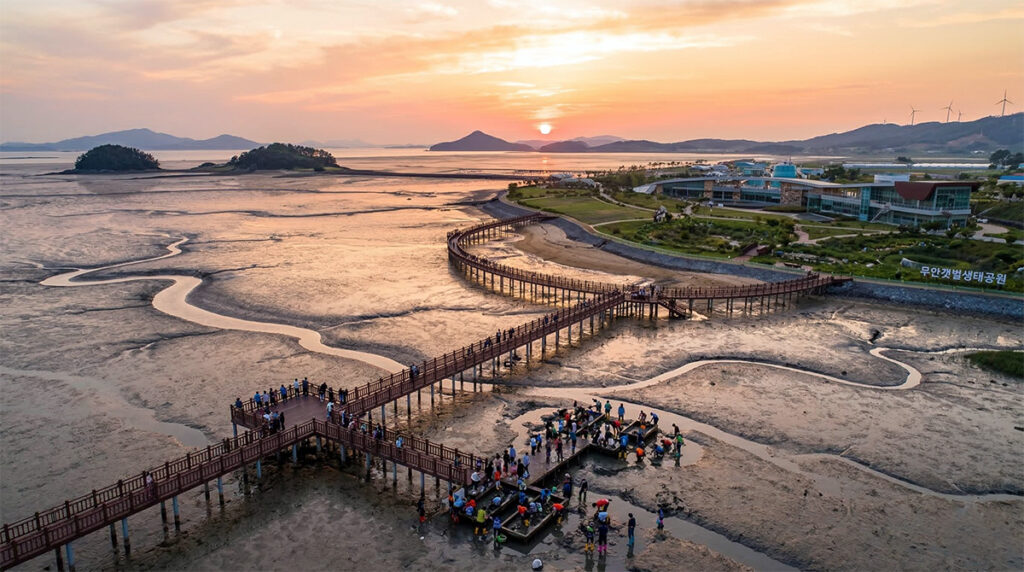
You absolutely cannot skip this! A short drive from Samhyang-eup, this park protects one of Korea’s most vital ecosystems. You can walk along elevated observation decks, learn about the tiny creatures that live in the mud, and even try your hand at clam digging. Pro-tip: Stay for the sunset. The way the light reflects off the wet mudflats is a spiritual experience.
Exploring the “Onion Trails”
Rent a bike or take a slow drive through the surrounding fields. There is something deeply meditative about seeing rows upon rows of Muan’s famous red-clay produce. During harvest season, many farmers are happy to sell a bag of fresh onions or sweet potatoes directly to you—it doesn’t get more “farm-to-table” than that!
The Provincial Office Walk
For a change of pace, stroll through the Jeollanam-do Provincial Office complex. The architecture is striking, and the surrounding public parks are meticulously maintained. It’s a great spot to see the “modern” side of Korean civic life.
A Culinary Quest for the “Red Clay” Flavors
Your taste buds will thank you for coming here. Look for local spots serving:
-
Nakji Bibimbap: Spicy stir-fried octopus over rice.
-
Yeonpo-tang: A clear, refreshing octopus soup that is famous in Muan.
-
Onion-infused dishes: You’ll be surprised how many creative ways locals use their prize onions!
Planning Your Trip: Getting There is a Breeze!
Think a rural gem is hard to reach? Think again! Samhyang-eup is surprisingly accessible.
-
By Air: You can fly into Muan International Airport (MWX)! It serves domestic routes (like Jeju) and several international locations. From the airport, a taxi will get you to Samhyang-eup in minutes.
-
By KTX (High-Speed Train): This is the most popular choice. Hop on a KTX from Seoul’s Yongsan Station to Mokpo Station. The ride is a smooth 2.5 to 3 hours. Once at Mokpo, Samhyang-eup is just a 15-minute taxi or bus ride away.
-
By Express Bus: Buses from Seoul (Gangnam or Dong Seoul) to Mokpo are frequent, affordable, and very comfortable. It takes about 4 hours, and you get to see the beautiful Korean countryside along the way.
-
By Car: If you want total freedom to stop at every scenic overlook, rent a car. The drive from Seoul takes about 4 to 5 hours via the well-maintained highways.
Final Thoughts: Why You Should Go Now
Muan-gun Samhyang-eup isn’t just a place on a map; it’s a feeling. It’s the feeling of fresh sea air, the taste of earth-grown sweetness, and the sight of a horizon that hasn’t been blocked by a skyscraper. Whether you’re a solo backpacker, a photography enthusiast, or a family looking for a unique cultural experience, this corner of Jeollanam-do is waiting to welcome you with open arms.