
Andong: Korea’s Spiritual Capital — A Journey Through Time and Tradition
Andong: The Spiritual Capital of Korea – A Complete Guide to a Time-Travel Adventure
Hello to all my fellow globetrotters and culture enthusiasts! While South Korea is famous for its towering skyscrapers and neon-lit streets, sometimes you just need to escape the urban hustle and breathe in the “real” soul of the country. If that sounds like you, then let me introduce you to the crown jewel of Gyeongsangbuk-do: Andong.
Known as the “Spiritual Capital of Korea,” Andong is a place where a thousand years of tradition and the noble “Seonbi” (scholar) spirit are still very much alive. I’ve personally explored every corner of this city, and today, I’m sharing all my favorite spots and insider tips to help you fall in love with its charm. Ready to step back in time with me?
1. Why Andong? (The Scent of History and Culture)
Andong isn’t just a city with old buildings; it was the heart of Confucian education and philosophy during the Joseon Dynasty. It’s where legendary scholars like Yi Hwang (Toegye) left their mark, and you can feel that intellectual weight in every step you take.
Thanks to its unique geography—nestled against mountains and embraced by the winding Nakdong River—many 100-year-old clan houses and academies have been perfectly preserved. If you want to understand the deep-rooted emotional DNA of the Korean people, Andong is an absolute must-visit.
2. Must-Visit “Instagrammable” Spots & Essential Stops
Hahoe Folk Village
A UNESCO World Heritage site, Hahoe is a “living museum” where residents still reside in traditional hanok houses. Walking through the dirt-path alleys feels like a movie set from the Joseon era.
-
Best Photo Spot: While the village itself is charming, the real “view of a lifetime” is from Buyongdae Cliff across the river. Take a short ferry ride and hike up for 15 minutes to see the lotus-shaped village layout from above. This panoramic shot is a guaranteed social media hit!
-
Don’t Miss: The Hahoe Mask Dance Drama (Byeolsingut Talnori). The satire and humor of the performers are infectious—you’ll find yourself dancing along in no time!
Dosan Seowon
This is the Confucian academy where Yi Hwang, the face on the Korean 1,000-won bill, taught his disciples. The architecture is modest and disciplined, blending harmoniously with nature. It’s the kind of place where you feel like you could actually enjoy studying.
-
Photo Tip: Capture the tranquil courtyards and the view of the Nakdong River from the main lecture hall (Jyeongyodang). It’s the ultimate “healing shot.”
Wolyeonggyo Bridge
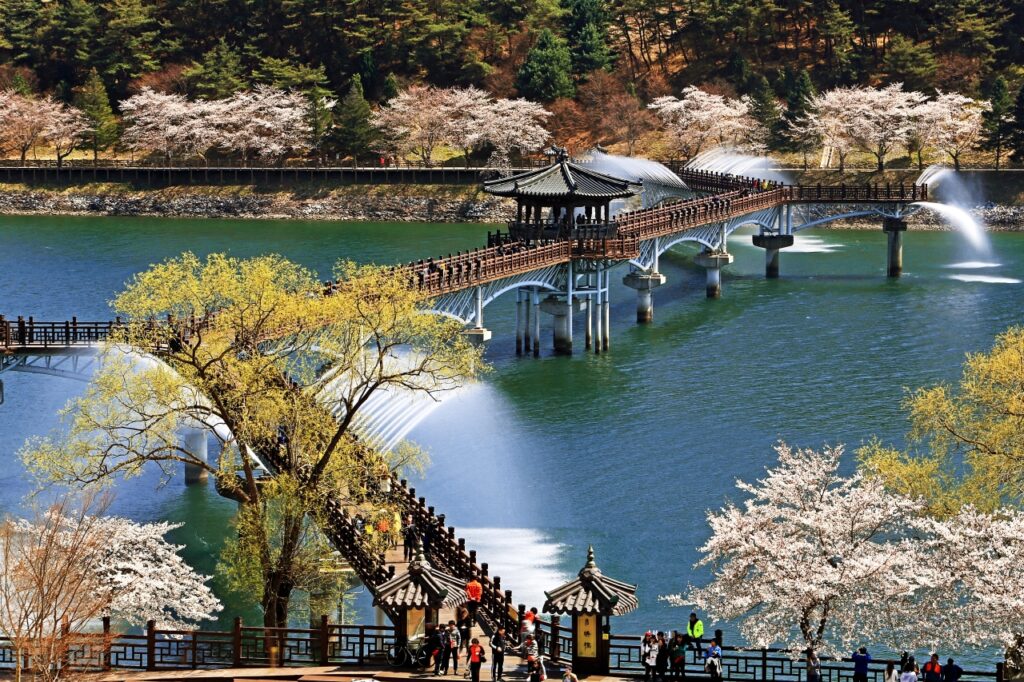
The longest wooden footbridge in Korea, Wolyeonggyo is at its best after the sun goes down. Sitting in the Moonlight Pavilion (Wolyeongjeong) in the middle of the bridge with the river breeze is pure bliss. It also carries a touching local legend of a wife who wove hemp shoes out of her own hair for her late husband.
-
Night View Point: When the bridge lights up, the reflection on the water is magical. If you’re traveling with a partner, this is the peak romantic atmosphere!
3. A Feast for the Senses: Andong’s “Big 4” Foods
Andong is a paradise for foodies! Here are the four dishes I tried and absolutely loved:
-
Andong Jjimdak: You have to visit the “Jjimdak Alley” in the Old Market. It’s a massive plate of savory-sweet soy-marinated chicken, veggies, and chewy glass noodles. It’s miles deeper in flavor than the versions you find in Seoul!
-
Gan-godeungeo (Salted Mackerel): Since Andong is inland, they traditionally salted mackerel to preserve it. Grilled to a golden crisp, a piece of this salty fish is the ultimate “rice thief.”
-
Heotjesabap: This is a “fake” funeral rite meal—bibimbap-style food eaten by scholars who wanted the taste of ritual food without the actual ceremony. It’s clean, healthy, and highlights the natural flavors of the vegetables.
-
Andong Soju: For the drinkers out there, this is non-negotiable! Distilled in the traditional way, it has a high ABV but a incredibly clean finish and a beautiful aroma.
4. Practical Travel Tips (Transport & Timing)
Getting There
-
From Seoul: Take the KTX-Eum from Cheongnyangni or Seoul Station. It takes about 2 to 2.5 hours—much faster and more comfortable than the bus!
-
From Busan/Daegu: You can reach Andong in 1.5 to 2 hours by intercity bus or train, making it a perfect day trip or weekend getaway.
Best Time to Visit
-
Autumn (Late Sept – Early Oct): This is the golden window! Not only is the weather perfect, but the Andong International Mask Dance Festival takes place then. The whole city comes alive with energy and performances.
-
Spring (April): The cherry blossoms along the Nakdong River turn Andong into a literal painting.
5. Bonus: Nearby Gems to Add to Your Itinerary
If you have extra time, consider these neighboring cities in Gyeongsangbuk-do:
-
Yeongju: Just 30 minutes away! Visit Buseoksa Temple, one of the most beautiful wooden temples in Korea.
-
Gyeongju: The “Museum Without Walls” is about 1.5 hours by car. Combining the Confucian culture of Andong with the Buddhist splendor of Gyeongju is the ultimate Korean heritage route.
Andong feels like a place that gently whispers, “It’s okay to slow down,” to travelers exhausted by the pace of modern life. If you’re looking for genuine relaxation amidst timeless scenery and tradition, why not head to Andong this weekend?
I hope your trip to Andong is filled with unforgettable memories! If you have any questions, feel free to ask.
Should I put together a list of hidden “hidden gem” cafes in Andong for you next, or would you prefer a review of staying overnight in a traditional house in Hahoe Village?
#Andong #KoreaTravel #VisitKorea #HahoeVillage #KoreanFood #TravelGuide #CulturalTravel #Jjimdak #HiddenGem #AsiaTravel