
Unveiling Ganghwa Island: Korea’s Timeless Treasure of History and Nature
Discover Ganghwa Island: A Treasure Trove Near Seoul Where 5,000 Years of History Breathe!
Hello there! Today, I’m taking you on a journey to Ganghwa-gun—a place just about an hour’s drive from Seoul, yet one that feels like an entirely different world the moment you step foot on it. If you thought Ganghwa was “just another island,” think again! It is a “museum without walls” where Korea’s epic history, from prehistoric dolmens to the struggles and triumphs of the modern era, unfolds like a grand panorama. Ready to dive into a vivid travelogue of Ganghwa Island? Let’s go!
1. A Time Machine to the Prehistoric Era: UNESCO-Recognized Dolmens
As soon as I arrived, my first stop was the Ganghwa Dolmen Sites. Seeing those massive, table-shaped stone structures—which I had only ever seen in textbooks—in person was absolutely jaw-dropping! It sent shivers down my spine just imagining how people thousands of years ago managed to move and stack such incredibly heavy stones.
Recognized as a UNESCO World Heritage site, this area has beautifully maintained walking paths, making it a perfect spot for a light stroll with family or partners. Pro tip: if you snap a photo of the dolmens against the backdrop of the setting sun, you’re guaranteed a “photo of a lifetime.” It’s a surreal feeling where the past and present seem to intersect.
2. The Burning Heart that Defied Invasions: Coastal Fortress Tour
Because of its strategic location at the mouth of the Han River, Ganghwa Island was historically the front line of defense against foreign invasions. That’s why the island is dotted with fortresses known as Jin and Bo, such as Chojijin, Deokjinjin, and Gwangseongbo.
-
Chojijin: This was the fierce battlefield of the Shinmiyangyo (U.S. expedition) and the Unyo Incident. Seeing the actual shell marks embedded in the castle walls makes your heart heavy with the intensity of that era.
-
Gwangseongbo: The walking trail here is pure art! Walking along the ramparts following the coastline while the sea breeze blows away your stress is heavenly. You’ll find yourself wondering how a historical battlefield can be this beautiful.
Watching the powerful currents of the Ganghwa Strait beyond the walls, you can’t help but feel a sense of solemnity and respect for the ancestors who fought so hard to protect the nation.
3. Finding Peace of Mind: Jeondeungsa and Bomunsa Temples
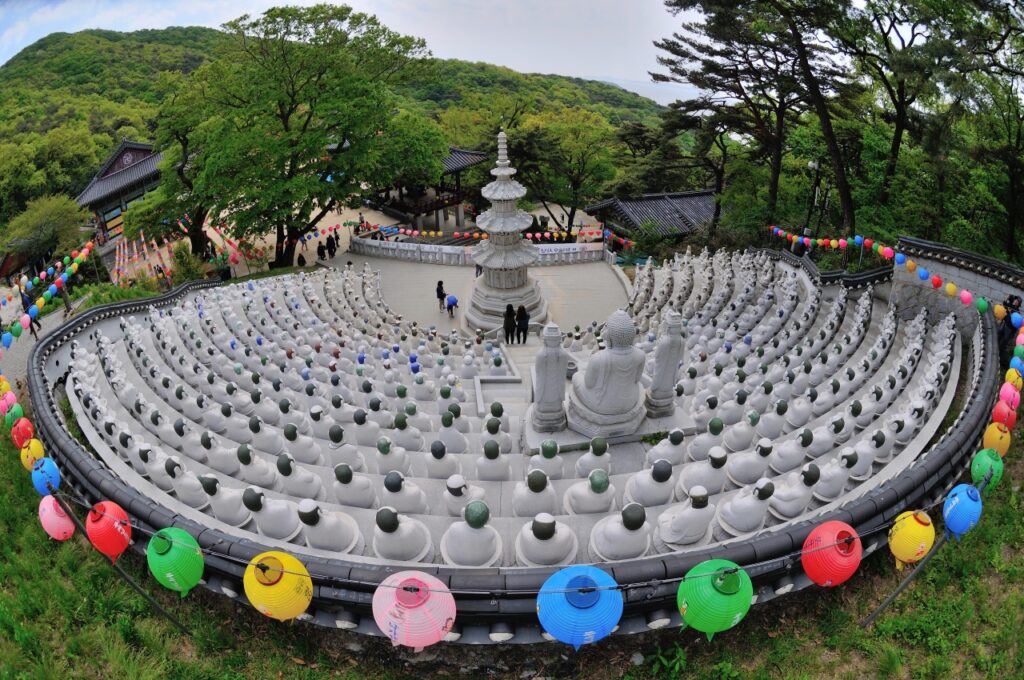
If you’ve filled your head with history, it’s time to empty your mind. Ganghwa is home to Jeondeungsa, one of the oldest Buddhist temples in Korea. Tucked inside the Jeongjoksan Fortress, the temple is surrounded by lush trees, making the air feel instantly different. Hunting for the legend of the “Naked Woman Statue” hidden under the eaves of the main hall adds a bit of whimsical fun to the visit.
For a more unique experience, head over to Seokmodo Island to visit Bomunsa Temple. The giant Maaebul (rock-carved Buddha) under the “Eyebrow Rock” is spectacular, but the sunset over the West Sea from here is truly “world-class.” Watching the sun dye the ocean red makes all your worldly worries simply vanish.
4. The ‘Real’ Fun of Ganghwa: Food and Activities
You can’t talk about travel without food! Ganghwa is famous for its abundance of local specialties.
-
Ganghwa Ginseng & Lionsfoot Mugwort: There’s nothing better for a health boost. A bowl of Samgyetang (ginseng chicken soup) loaded with fresh ginseng will wipe away all your travel fatigue.
-
Seasoned Large-eyed Herring (Baendengi): If you visit the Ganghwa Pungmul Market, you must try this! The spicy and sour seasoning paired with the herring is enough to bring back any lost appetite.
-
Ganghwa Turnip Kimchi (Sunmu): Its unique, pungent, and peppery kick is one-of-a-kind—perfect to buy as a souvenir.
If you’re craving a bit more thrill, I highly recommend the Ganghwa Seaside Luge! Boasting one of the longest tracks in Asia, the feeling of racing down the mountain with a view of the sea is pure adrenaline. It’s one of those “magic activities” where the adults end up having even more fun than the kids!
5. Smart Travel Tips for Ganghwa!
Here are some real-world tips from my personal experience:
-
Best Time to Visit: While it’s charming all year round, I strongly recommend Autumn! The sight of the golden Ganghwa plains blending with the fiery red foliage is a photographer’s dream.
-
Transportation: While there are buses from Seoul (like the 3000), Ganghwa is much larger than you might think! Since the attractions are spread out, using a rental car or your own vehicle will make your trip much more efficient and comfortable.
-
Ganghwa Peace Observatory: This is where you can see North Korean land at its closest. Don’t miss the unique experience of looking through binoculars to see the daily lives of people across the river.
6. Closing: The Comfort Ganghwa Offers
Ganghwa was more than just a tourist destination; it was a special space where the tenacious vitality of the Korean people and beautiful nature coexist. While the flashy city lights are great, why not take a step back and follow the footprints of the past on an island where time slows down?
If you need a “comma” in your hectic life, don’t hesitate to head to Ganghwa this weekend. The massive dolmens, the cool sea breeze, and the warm hearts of the locals are all waiting for you!
#GanghwaIsland #TravelKorea #IncheonTourism #KoreanHistory #SeoulDayTrip #Luge #Jeondeungsa #Bomunsa #UNESCO #K_Travel #VisitKorea