
The Ultimate Cheongju Food Guide: Why ‘Gongi Makguksu’ is a Must-Visit
Cheongju’s Hidden Gem: A Must-Visit Makguksu Restaurant for Travelers!
Cheongju, a city where history and culture breathe… The moment I stepped into this city, I felt a mix of excitement and a tiny bit of nerves. New sights, an unfamiliar language, and most importantly, the biggest challenge (and joy) of traveling in Korea: finding a truly “authentic” local restaurant. After scrolling through countless blogs and SNS reviews, one name caught my eye: ‘Gongi Makguksu.’
My Korean friends raved about this place, calling it a “must-eat” in Cheongju. That curiosity gave me the courage to navigate the local bus system. With my map app open and a fluttering heart, I headed toward my destination.
First Impressions: Warmth and Nostalgia
As soon as I opened the door, I was greeted by a warm atmosphere and a savory, nutty aroma. The interior has that classic “Nopo” (long-standing traditional restaurant) vibe—rustic yet incredibly cozy. The walls, lined with old photos and frames, told a story of a long history and deep-rooted popularity. It felt like visiting a Korean grandmother’s house.
Unlocking the Secret of ‘Gongi’
While browsing the menu, I wondered what “Gongi” meant. When I asked the staff, they explained with a kind smile: “When you order Makguksu, the buckwheat noodles are pressed fresh on the spot using a traditional tool called a ‘Gongi’ and boiled immediately.”
Freshly pressed noodles! I was hooked. I even got to peek at the chef skillfully loading the buckwheat dough into the machine—watching the white noodles spiral out like magic was a highlight of the trip.
The Ultimate Taste Experience
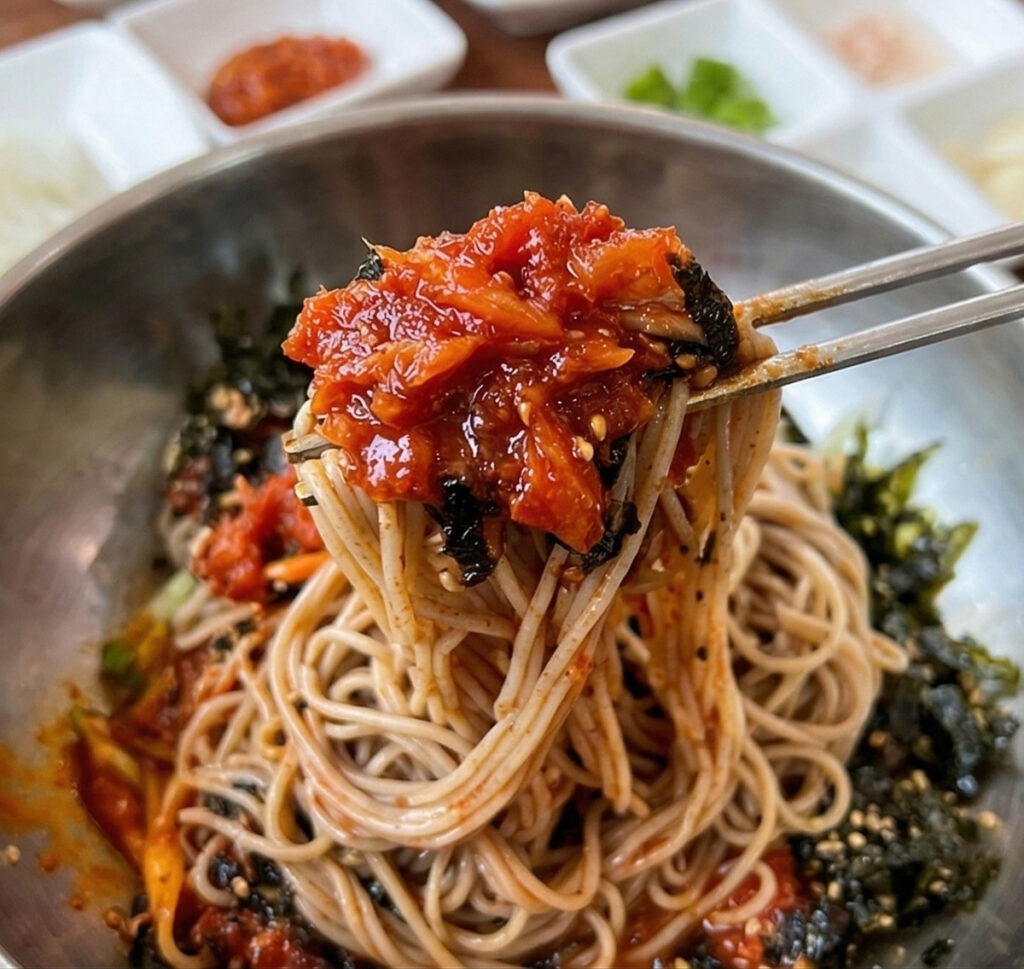
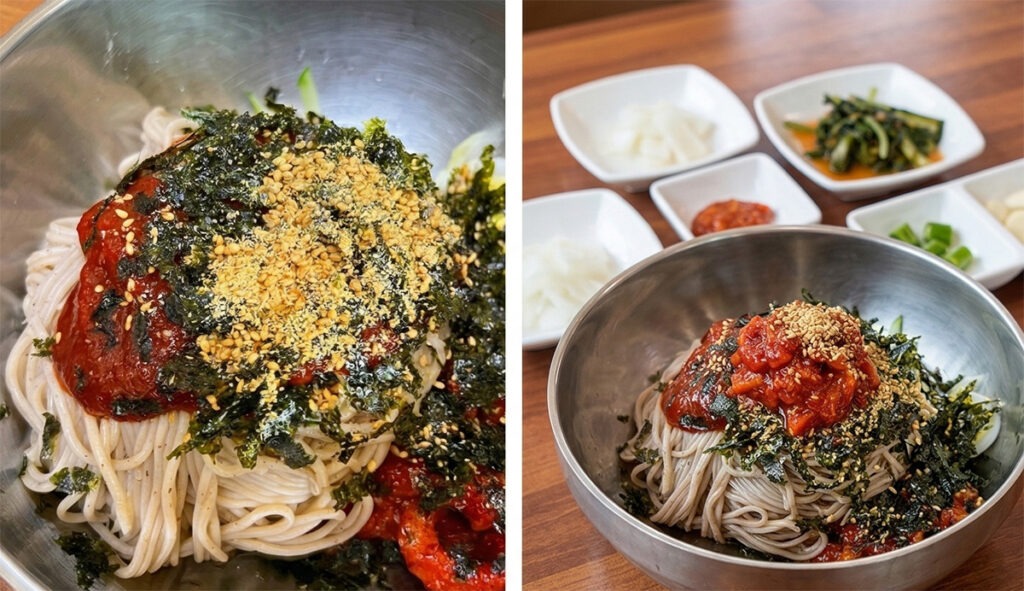
The Makguksu arrived in a generous bowl. Perfectly arranged buckwheat noodles topped with a vibrant red sauce, cucumbers, radish, a boiled egg, and a sprinkle of seaweed—it was a visual masterpiece.
- The Texture: Unlike ordinary noodles, these were incredibly bouncy and chewy. The earthy, nutty scent of buckwheat filled my mouth with every bite.
- The Sauce: The perfect balance of spicy, sweet, and tangy. It wasn’t overwhelmingly spicy, making it very approachable even for those not used to Korean heat. It had a deep “umami” that kept me coming back for more.
- The Toppings: The crispy seaweed added a savory touch, while the crushed sesame seeds elevated the nuttiness to a whole new level.
A Perfect Pair: Boiled Pork (Suyuk)
Following a friend’s advice, I also ordered the Suyuk. The pork was incredibly tender and moist. Wrapping a piece of pork with the noodles created a rich, savory harmony that was simply unforgettable.
A Lasting Memory of Cheongju
Gongi Makguksu was more than just a meal; it was a cultural experience and a taste of Korean hospitality. It remains one of the brightest highlights of my journey through Korea.
Tips for Foreigners
- Spice Level: If you’re worried about the heat, say “An-mae-up-ge hae-ju-se-yo” (Please make it not spicy).
- Bibim vs. Mul: Bibim is mixed with spicy sauce; Mul is served in a cold, refreshing broth. Try both!
- Friendly Staff: Don’t hesitate to ask questions; the staff is very welcoming to international guests.
How to Get There from Seoul
- By Bus (Recommended): Take a bus from Seoul Express Bus Terminal (Express Bus) or Central City Terminal (Gong-ho) to Cheongju Express Bus Terminal. (Approx. 1.5 hours)
- By Train: Take the KTX/SRT to Osong Station, then catch a taxi or a local express bus (like #747) to the city center.
- By Car: It’s about a 1.5 to 2-hour drive via the Gyeongbu Expressway. Parking is available right in front of the restaurant!
Tags: #CheongjuFood #CheongjuTravel #GongiMakguksu #KoreaTrip #VisitKorea #BuckwheatNoodles #KoreanCuisine #HiddenGem #TravelGram #Foodie #K-Food #Cheongju #Suyuk
If you are visiting Cheongju, Gongi Makguksu is an absolute must. Come for the delicious noodles, and stay for the warm Korean heart!