
Discover Damyang: Korea’s Enchanting Bamboo Kingdom in Jeollanam-do!
Welcome, fellow globetrotters and Korea enthusiasts! If you’re searching for a destination that offers a serene escape, a deep dive into nature, and a taste of traditional Korean charm, then look no further than Damyang-eup, Damyang-gun, Jeollanam-do. Tucked away in the southwestern part of Korea, Damyang is a true gem, renowned globally for its breathtaking bamboo forests, picturesque tree-lined roads, and a tranquil atmosphere that invites you to slow down and savor every moment. As your expert guide to Korea tourism, I’m thrilled to unveil the magic of this unforgettable region.
Damyang’s Verdant Heart: A Glimpse into Nature and History
Imagine a place where the air is crisp, the greenery is vibrant, and the sounds of bustling city life fade into a gentle whisper of leaves. That’s Damyang for you. Located in Jeollanam-do (South Jeolla Province), Damyang-gun, specifically its central hub of Damyang-eup, lies nestled among rolling hills and fed by the Yeongsangang River. This prime geographic location has blessed it with fertile lands, making it a cradle for agriculture and a haven for diverse flora, most notably, bamboo.
Damyang isn’t just a pretty face; it boasts a rich historical and cultural tapestry. For centuries, it has been a place of scholarly pursuit and artistic inspiration. The region is celebrated as one of Korea’s designated “Slow Cities” (Cittaslow), a testament to its commitment to preserving traditional culture, local flavors, and a sustainable, unhurried way of life. This philosophy permeates everything you experience here, from the meticulously maintained traditional gardens to the locally sourced cuisine. When I visited in November 2020, the autumnal hues beautifully complemented the evergreen bamboo, creating a stunning visual feast that truly captures the essence of Korea’s natural beauty.
Must-See Attractions: Bamboo Forests, Gardens, and Gaze
Damyang-eup is home to several iconic landmarks that draw visitors from around the world. These are the places that define Damyang’s unique character and offer incredible opportunities for exploration and photography.
Juknokwon Bamboo Forest
This is arguably Damyang’s most famous attraction and a highlight for any Korea travel itinerary. Juknokwon Bamboo Forest is a sprawling, lush sanctuary where towering bamboo stalks create an ethereal canopy. As you wander through its eight distinct walking paths, each with a poetic name like “Lovers’ Road” or “Philosophers’ Road,” you’ll feel an immediate sense of calm. The air here is noticeably cooler and fresher, thanks to the bamboo’s natural air-purifying qualities. It’s a fantastic spot for “forest bathing” (shinrin-yoku) and offers countless stunning photo opportunities, especially as sunlight filters through the dense bamboo leaves. Don’t miss the observatory for panoramic views or the traditional Hanok village within the forest, offering a glimpse into local culture.
Metasequoia-lined Road
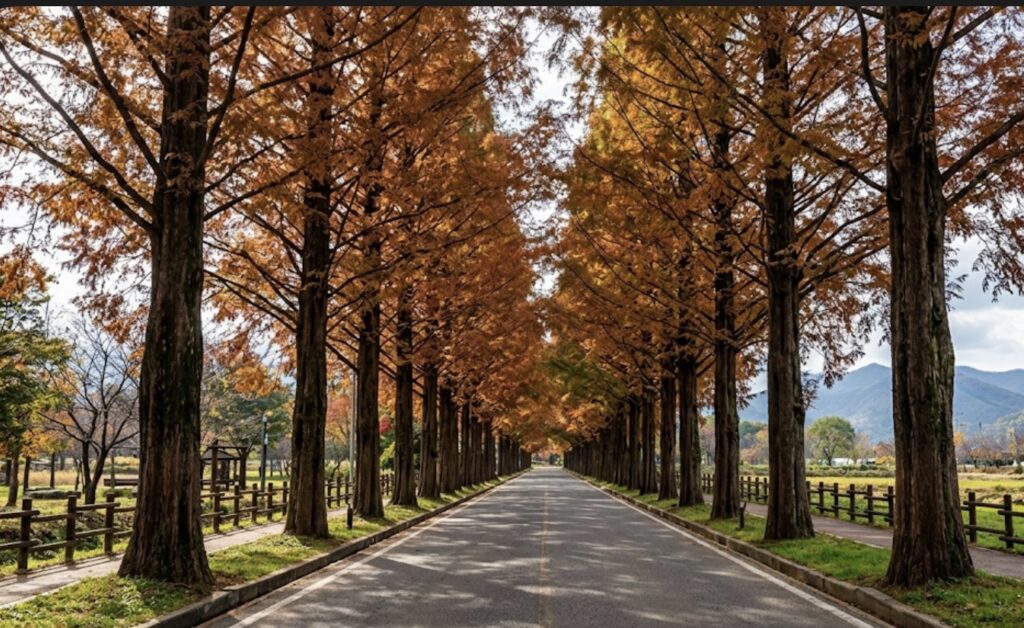
Just outside Damyang-eup, this majestic tree-lined avenue is a photographer’s dream and another hallmark of Damyang tourism. The Metasequoia-lined Road stretches for several kilometers, with colossal metasequoia trees forming a natural tunnel. While breathtaking year-round, it’s particularly spectacular in autumn when the leaves turn brilliant shades of red, orange, and gold, creating a vibrant spectacle. It’s perfect for a leisurely stroll, cycling, or simply enjoying the scenic beauty. This road is so iconic it has been recognized as one of Korea’s most beautiful roads.
Gwanbangjerim Forest
Adjacent to Damyang-eup, along the Damyangcheon Stream, lies Gwanbangjerim Forest. This historic forest was originally planted in the 17th century as a natural levee to prevent flooding. Today, it’s a beloved local spot for picnics, walks, and enjoying the shade of ancient zelkova, hackberry, and nettle trees. It offers a more relaxed, authentic local experience compared to the more tourist-centric Juknokwon, and you can rent bikes nearby to explore the area.
Soswaewon Garden
A short drive from Damyang-eup, Soswaewon Garden is a masterpiece of traditional Korean landscape architecture from the Joseon Dynasty. This private garden, designated a scenic site and on UNESCO’s Tentative List, perfectly embodies the Confucian ideal of harmony between humans and nature. Built by a scholar, it features pavilions, streams, and carefully arranged trees and rocks, all designed to blend seamlessly with the surrounding environment. Visiting Soswaewon is like stepping back in time, offering a profound sense of peace and an insight into classical Korean aesthetics. It’s a must-visit for those interested in Korean history and culture.
Planning Your Damyang Adventure: Tips & Logistics
Ready to embark on your journey to Damyang? Here’s everything you need to know to make your trip seamless and enjoyable.
Best Time to Visit
- Spring (April-May): The bamboo is at its freshest green, and the weather is pleasant for walking.
- Summer (June-August): The bamboo forests offer a cool, shady escape from the summer heat, making it a popular season.
- Autumn (September-November): Arguably the most picturesque season, especially for the Metasequoia-lined Road, which transforms into a riot of fall colors. The photo taken in November 2020 perfectly captures this autumnal charm.
- Winter (December-March): Offers a serene, quiet beauty, with snow-dusted bamboo creating a unique, tranquil landscape.
How to Get There
Getting to Damyang-eup is relatively straightforward, making it an accessible destination for international travelers.
- From Seoul: Take the KTX high-speed train from Seoul Station or Yongsan Station to Gwangju Songjeong Station (approx. 2 hours). From Gwangju Songjeong, you can take a local bus (such as Bus No. 311) or a taxi directly to Damyang-eup (approx. 40-50 minutes).
- From Gwangju: If you’re already in Gwangju, you can take an intercity bus from Gwangju U-Square Bus Terminal directly to Damyang Terminal. Buses are frequent and the journey takes about 30-40 minutes.
- Local Transportation: Once in Damyang-eup, many attractions like Juknokwon and Gwanbangjerim are within walking or cycling distance. Taxis are also readily available, and local buses connect to further sites like Soswaewon.
What to Eat
Damyang is a culinary delight, famous for its unique local specialties:
- Damyang Tteokgalbi (Grilled Short Rib Patties): A must-try! Unlike traditional tteokgalbi made with ribs, Damyang’s version is often made by mincing the meat and grilling it over charcoal, giving it a distinct flavor and texture.
- Juksunbap (Bamboo Shoot Rice): Given its bamboo fame, fresh bamboo shoots are a staple. This flavorful rice dish often comes with an array of healthy side dishes.
- Damyang Guksu (Noodles): Enjoy a bowl of warm noodles by the stream in Gwanbangjerim.
- Damyang Juksunppang (Bamboo Shoot Bread): A unique local snack, often shaped like a bamboo shoot and filled with sweet bean paste and sometimes even bamboo bits.
Visitor Tips
- Comfortable Shoes: You’ll be doing a lot of walking, especially in Juknokwon and along the Metasequoia Road.
- Allow Time: Don’t rush Damyang. Embrace the “slow city” philosophy and allow at least a full day, or ideally two, to truly soak in the atmosphere.
- Admission Fees: Juknokwon and Soswaewon have admission fees (typically a few thousand Korean Won).
- Rent a Bike: Exploring the Gwanbangjerim Forest and the Metasequoia-lined Road by bicycle is a fantastic experience.
Beyond the Bamboo: Nearby Gems for Your Itinerary
Damyang-eup is perfectly positioned to be part of a larger Jeollanam-do travel adventure. Consider extending your trip to these nearby attractions:
- Gwangju Metropolitan City: Just a short bus ride away, Gwangju is a vibrant cultural and artistic hub. Explore its numerous museums, art galleries, and enjoy its famous food scene. It’s an excellent base for exploring the wider Jeolla region.
- Naejangsan National Park: If you’re visiting in autumn, a trip to Naejangsan is highly recommended. It’s one of Korea’s most stunning national parks for fall foliage, though it requires a slightly longer journey.
- Suncheon Bay National Garden & Wetland: A bit further south, Suncheon offers incredible natural beauty with its vast wetlands and meticulously designed national garden. It’s a fantastic destination for nature lovers and birdwatchers.
Damyang-eup, Damyang-gun, Jeollanam-do, offers a unique blend of natural beauty, rich history, and a peaceful ambiance that’s increasingly rare in our fast-paced world. Whether you’re seeking a tranquil escape, stunning photo opportunities, or a taste of authentic Korean culture, Damyang promises an enriching and memorable experience. So, pack your bags and prepare to be enchanted by Korea’s verdant bamboo kingdom!
#Damyang #KoreaTravel #Jeollanamdo #BambooForest #SlowCity #Juknokwon