
[Seoul Discovery] Expectation vs. Reality: Why National Folk Museum of Korea is a Must-Visit
[Seoul Discovery] Expectation vs. Reality: Why National Folk Museum of Korea is a Must-Visit
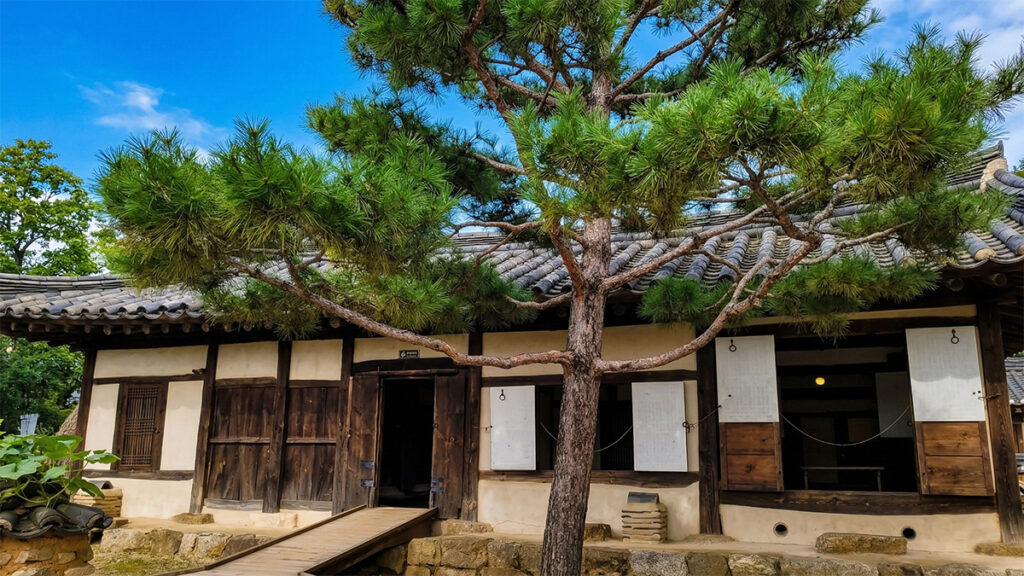
When we think of Seoul, Gyeongbokgung Palace is usually the first thing that comes to mind. But right next to those grand palace walls lies a place that offers something even more intimate and surprising: The National Folk Museum of Korea (국립민속박물관).
To be honest, I didn’t expect much at first. I thought it would just be another gallery displaying old, dusty artifacts. I was completely wrong.It turned out to be a place that stole my heart, even more than Gyeongbokgung itself. Here is why this museum is a “hidden gem” you cannot afford to miss.
1. The Magic Begins Before You Enter
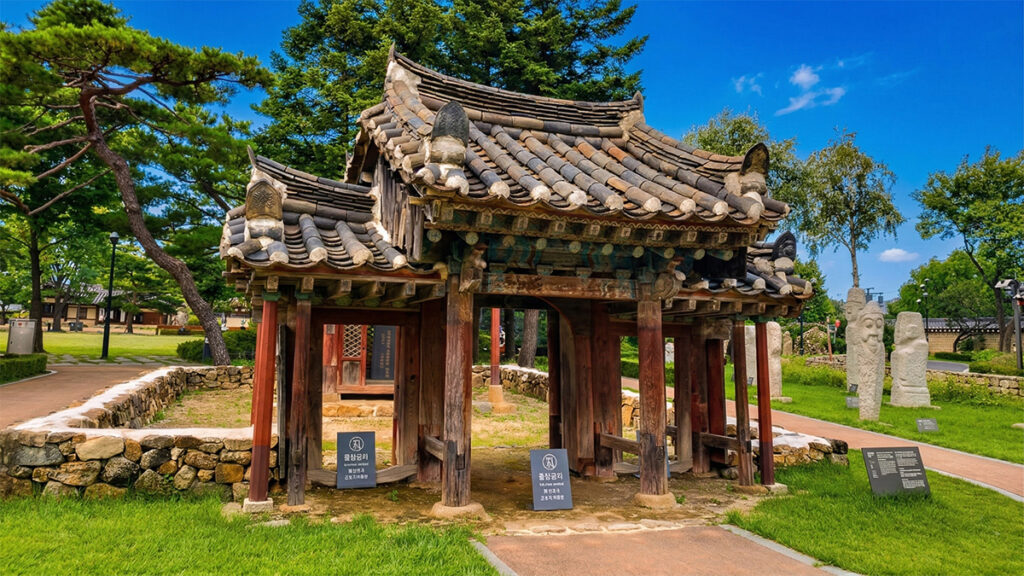
The experience starts the moment you walk toward the entrance. After leaving your bags in the lockers (highly recommended for a light stroll!), the path leading to the museum is lined with Sotdae(wooden birds on poles), Seonghwangdang(stone stacks), and Jangseung(totem poles).
The traditional “Sosul-daemun” (high-gate) and the surrounding landscape are so well-preserved that it feels like you’ve stepped into a living Joseon-era village. You can feel the immense effort and craftsmanship that went into every corner of this outdoor exhibition.
2. A Journey Through the Korean Kitchen: “The Korean Table”
The special exhibition on Korean Food Culturewas a highlight.
- The Humble Pollock (Myeongtae):I was greeted by rows of dried pollock hanging from the ceiling. It’s a versatile fish that transforms into Dongtae, Buk-eo, or Hwangtae depending on how it’s prepared—a true hero of the Korean dining table.
- The Story of Anchovies:Once considered a “lowly” fish because they were so abundant, anchovies are now an indispensable (and sometimes expensive!) base for almost every Korean soup and side dish.
3. “Year of the Koreans”: Nostalgia for Locals, Wonder for Travelers
The permanent exhibition hall showcases a year in the life of a Korean person. For me, it was a trip down memory lane; for foreign visitors, it’s a fascinating look at a culture deeply rooted in the seasons.
- Tteokguk & New Year:Seeing the neatly sliced white rice cakes reminded me of the saying that “you must eat Tteokguk to turn a year older.” It’s a symbolic start to a pure, new year.
- Rat Fire Play (Jwibulnori):This brought back vivid memories of my childhood! We used to poke holes in cans, fill them with wood, and swing them in circles to create glowing rings of fire in the night sky. While it looked like “playing with fire,” it was actually a brilliant traditional way to burn away pests in the fields before the new farming season.
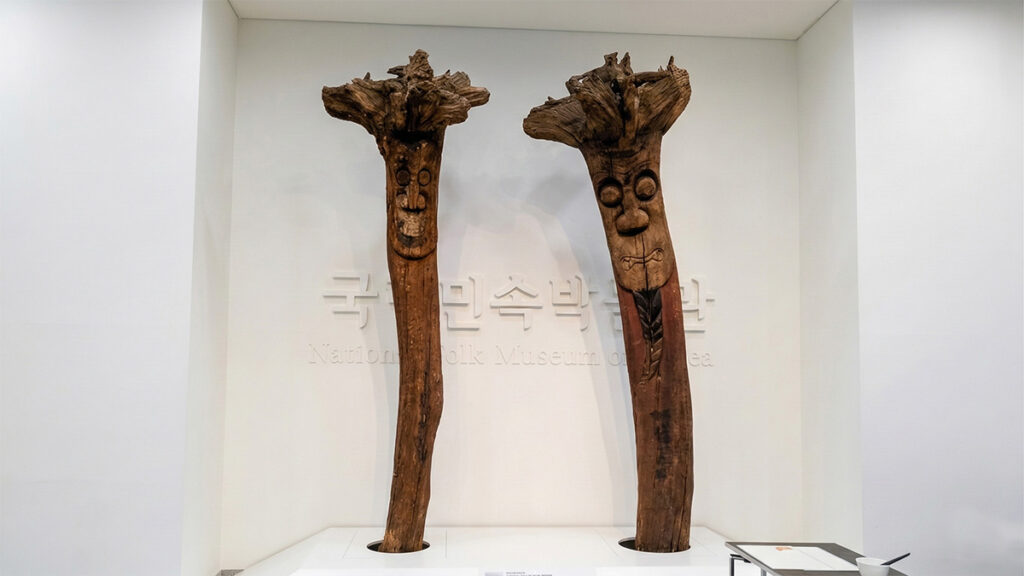
- Agriculture & The Ox:I saw the intricate wooden oxen used in Jeju’s shamanic rituals (Ipchungut) to pray for a good harvest. Seeing the old plows and muzzles made me realize just how vital oxen were to our ancestors—they were more than animals; they were family assets.
4. The Aesthetics of Daily Life (A Designer’s Perspective)
As a designer, I was struck by the textures of the past:
- Straw Shoes (Jipsin):Thinking about walking on modern asphalt with these makes my feet ache! But on the soft, old dirt paths, these were the sustainable sneakers of the era.
- The Retro Corner:From ancient looms to vintage electric fans that look like they could still spin, the museum perfectly captures the transition from the Joseon Dynasty to early modern Korea.
- The “Poop Jige” (A-frame carrier):Yes, even the carriers used for fertilizer (human waste!) are on display. It’s a raw, honest look at how nothing was wasted in the old days.
5. The “Four Seasons” Digital Experience
Don’t miss the high-definition media art wall. It projects the four seasons of Korea with such clarity that you’ll feel like you’re actually standing in a snowstorm or listening to summer cicadas. There’s a Toetmaru(traditional wooden porch) where you can sit and soak in the sights and sounds. It’s the ultimate “healing” spot.
📌 Information
- Location:37 Samcheong-ro, Jongno-gu, Seoul (Inside Gyeongbokgung grounds)
- Admission:Free!(But you may need a Gyeongbokgung ticket if entering through the palace side)
- Must-See:The “Street of the Past” (옛날 거리) outside the museum building.
#NationalFolkMuseum #SeoulGuide #VisitKorea #KoreanCulture #Gyeongbokgung #HiddenGem #TravelKorea #KoreanFood #MuseumLover #Seekorea21