
Unveiling Wanju-gun: Jeollabuk-do’s Enchanting Secret for Authentic Korea Travel
Discover the Hidden Treasure: A Heart-Fluttering Emotional Journey to Wanju-gun!
Hey there! When you think of “Korea,” do you only picture towering skyscrapers and flashy neon lights? If you’re yearning to breathe in the real soul of Korea, step away from the city chaos and head to Wanju-gun, a serene destination nestled warmly in the embrace of Jeollabuk-do. Often overshadowed by its famous neighbor, Jeonju, Wanju is actually a “true” hidden gem that savvy travelers keep to themselves.
As your travel expert, I’m bringing you the vibrant, “I-was-just-there” energy of Wanju’s unexpected charms. Get ready to scroll—your heart might just skip a beat!
A Peaceful Comma in Jeollabuk-do: Introducing Wanju-gun
Just a short drive from Jeonju Station, the view outside your window transforms instantly. Endless golden fields, soft rolling mountain ridges, and crystal-clear streams winding through the landscape—Wanju is a place that feels as comforting as a mother’s embrace.
Wanju in October is a literal work of art. When the mountains begin to change into their crimson and gold outfits, the air here offers a level of crispness you just can’t find in Seoul. But don’t worry! Wanju boasts a different charm for every season. From historical sites reborn as modern art spaces to Hanok villages that make you feel like a Joseon-era scholar, Wanju is the perfect place to realize the “Aesthetics of Slowness.”
Where Past and Present Dance: Samnye Culture Village
My first stop was Samnye Culture Village. The moment you walk in, the atmosphere is uniquely overwhelming. This site was originally a “grain granary” built during the Japanese colonial period to exploit the blood and sweat of local farmers. Today, these rugged brick buildings have been stunningly transformed into an art complex unlike any other in the world.
Open the old warehouse doors, and you’re met with sophisticated design museums and picture book galleries, with quirky sculptures greeting you in the courtyard. It’s a place where you can feel the resilience of Koreans who turned historical pain into artistic beauty. “Life-shots” (the best photos of your life) are guaranteed here, so make sure your battery is fully charged!
Walking on Clouds: Oseong Hanok Village
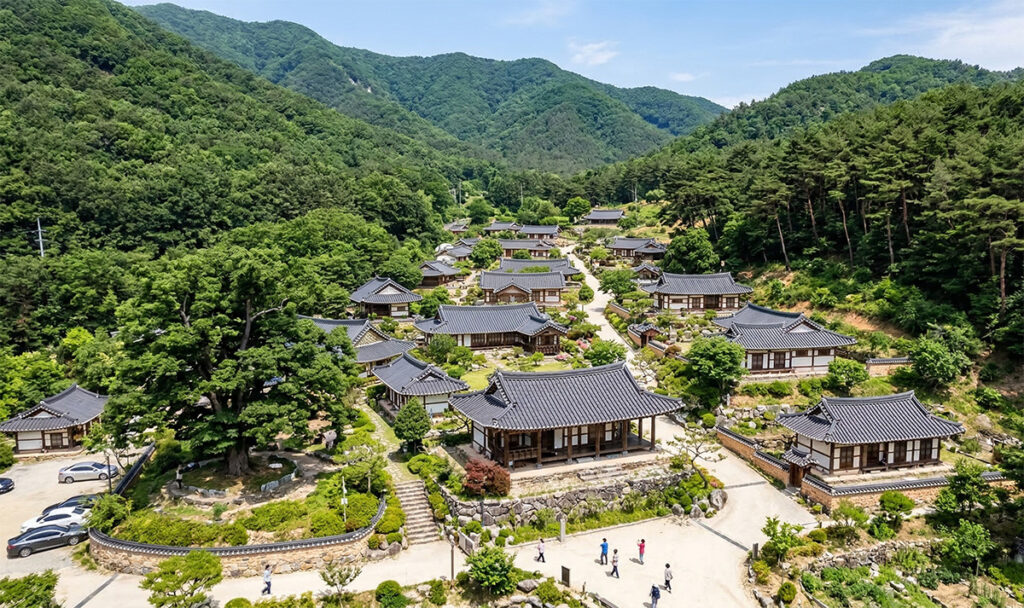
The next highlight of any Wanju trip is Oseong Hanok Village. Tucked away where Mt. Jongnam and Mt. Seobang hug the valley, entering this village feels like stepping into a time machine back to the Joseon Dynasty. The sight of Hanok tiled roofs huddled along the hillside, blending with the mountain mist, is simply spectacular.
Pro-tip: Why not spend a night at one of the Hanok guesthouses here? Laying your back on a warm ondol (underfloor heating) floor while sipping a cup of traditional tea will melt your urban stress away. Stepping out into the yard in the early morning to catch the sunrise over the mountains is a gift only Wanju can offer.
A Phytoncide Shower: Gosan Recreational Forest
If you want to give your lungs a gift after city life, head to Gosan Recreational Forest. Walking through the lush forest trails, you’ll feel your mind clearing instantly. In summer, dip your feet in the cool valley water; in autumn, enjoy the rhythmic crunch of fallen leaves under your boots.
For families, I highly recommend the camping facilities. Cooking a Korean-style BBQ under a star-studded sky is the definition of “heavenly flavor!” Immerse yourself in the tranquility of nature for a true reset.
When is the Best Time to Visit?
-
Spring (April–May): Pink cherry blossoms and fresh green sprouts. Perfect for light trekking.
-
Summer (June–August): The cool relief of Gosan Valley. It’s humid, but the forest shade is bliss.
-
Autumn (September–November): When Wanju is at its flashiest! Five-colored maples cover the world in a visual feast.
-
Winter (December–March): Quiet and meditative. The snowy Hanok village looks like a traditional ink-and-wash painting.
Getting There & Travel Tips
The fastest way from Seoul is taking the KTX to Jeonju Station (approx. 1.5 to 2 hours). From there, you can reach Wanju’s main attractions in about 30 minutes by taxi or rental car.
Local Foodie Tip! While Jeonju is famous for Bibimbap, Wanju is legendary for its Local Food. Try a “country table” (Sigo-bapsang) made with freshly harvested vegetables. Also, don’t miss traditional snacks featuring Wanju’s specialty—dried persimmons (Gotgam)—they make the best energy bars for your hike!
Top 4 “Life-Shot” Spots in Wanju
-
Oseong Hanok Village Cafe Terrace: Snap a shot with the entire village view in the background.
-
Samnye Culture Village Murals: Capture the harmony of rugged bricks and modern graphics.
-
Gosan Forest Trails: Don’t miss the moment sunlight filters through the leaves.
-
Local Traditional Markets: Street photography filled with the warmth and energy of local vendors.
Beyond Wanju (Recommended Itinerary)
If you can’t bear to leave, try a 2-night, 3-day course combining nearby cities:
-
Day 1: Enjoy Hanbok experiences and street food at Jeonju Hanok Village.
-
Day 2: Move to Wanju for an emotional recharge at Samnye Culture Village and Oseong Hanok Village.
-
Day 3: Visit the mysterious stone pagodas of Maisan Mountain in Jinan or the famous autumn leaves of Naejangsan National Park.
Wanju-gun isn’t just a dot on the map; it’s a warm space that teaches busy modern people the meaning of “rest.” For your next vacation, skip the cliché spots and create special memories in Korea’s hidden jewel, Wanju. A new story begins wherever your feet touch the ground!
#WanjuGun #Jeollabukdo #KoreaTravel #SouthKoreaTourism #HiddenGemsKorea #VisitKorea #SlowTravel #HanokVillage #PhotographyTravel